Laser Cutting vs. Plasma Cutting: Which Is Best for Your Stainless Steel Project?
Compare laser cutting vs plasma cutting for stainless steel fabrication. Learn the differences in precision, edge quality, speed, cost, material thickness, and choose the best sheet metal cutting technique for your project.

Laser Cutting vs. Plasma Cutting: Which Is Best for Your Project?
When manufacturing high-quality stainless steel products, selecting the right cutting process can make the difference between a flawless finish and costly rework. Whether you're fabricating commercial kitchen equipment, HVAC ducting, food-grade workstations, or architectural metalwork, choosing between laser cutting and plasma cutting affects accuracy, production time, edge quality, material waste, and overall project cost.
At Zahra Kitchen Equipments Manufacturing (L.L.C.), we use precision fabrication technologies to produce premium stainless steel products for restaurants, hotels, hospitals, cloud kitchens, industrial facilities, and commercial buildings across the UAE.
In this guide, we'll compare laser cutting vs plasma cutting stainless steel to help you choose the most suitable process for your next project.
Understanding Laser Cutting
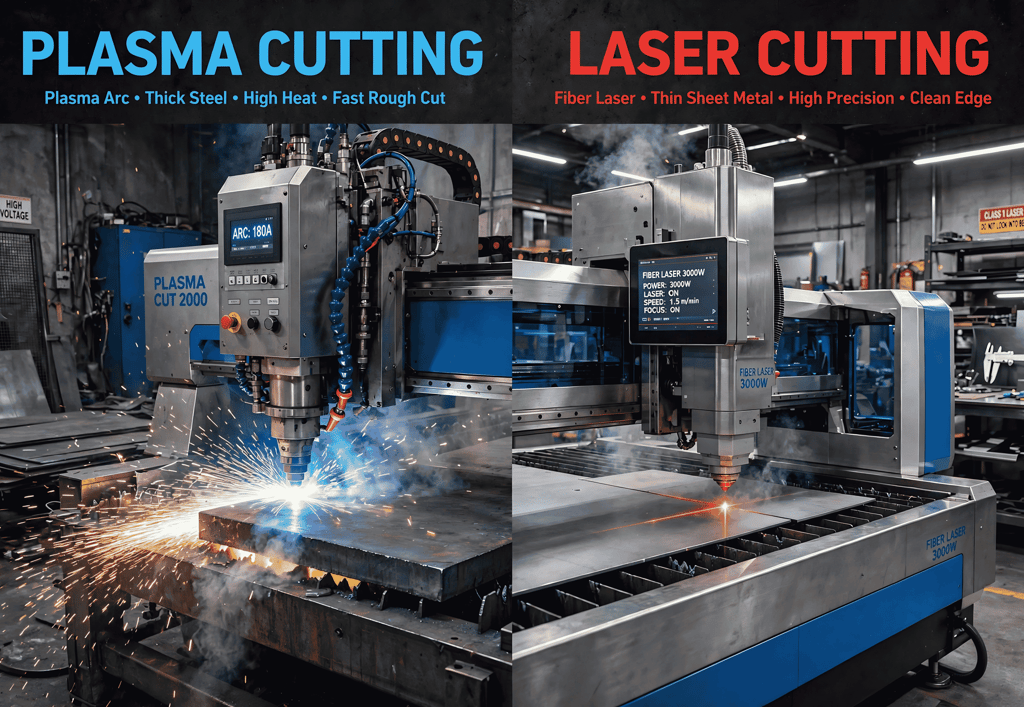
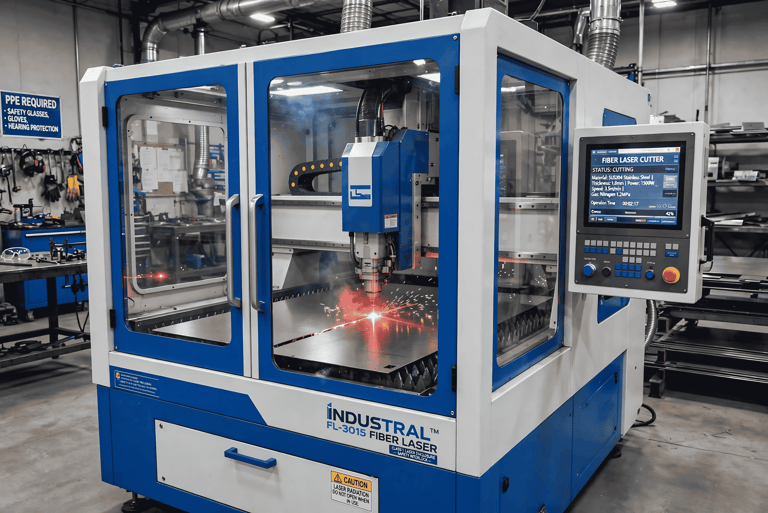
Laser cutting uses a highly concentrated beam of light to melt, burn, or vaporize metal with exceptional precision. Modern CNC laser machines are computer-controlled, allowing them to produce intricate designs, complex shapes, and extremely accurate cuts.
The process delivers smooth, burr-free edges that typically require little or no post-processing.
Laser cutting is especially suitable for:
Stainless Steel 304
Stainless Steel 316
Mild Steel
Galvanized Steel
Aluminum
Brass
Copper
Understanding Plasma Cutting
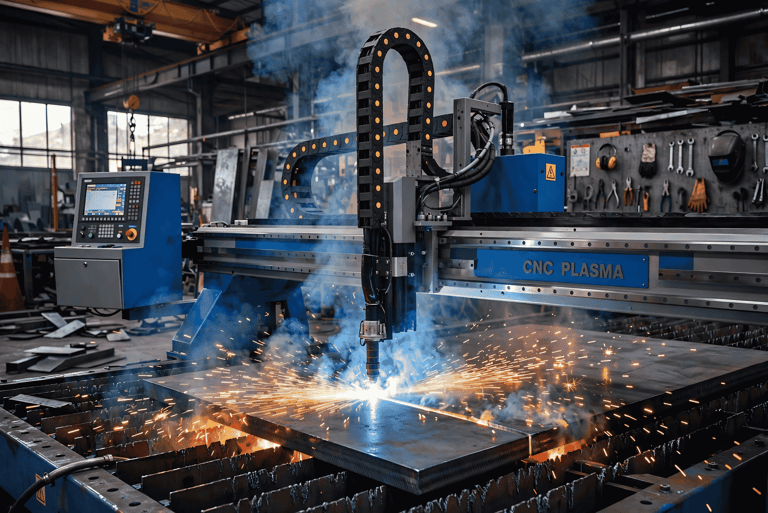
Plasma cutting works by sending compressed gas through a nozzle while an electric arc converts the gas into extremely hot plasma.
The plasma melts the metal while the high-speed gas removes the molten material from the cut.
Plasma cutting is widely used for thicker metals where speed is more important than ultra-fine precision.
1. Precision and Accuracy
This is where laser cutting clearly outperforms plasma cutting.
Laser machines can achieve tolerances as tight as:
±0.1 mm
This makes them ideal for:
Commercial kitchen equipment
Stainless steel cabinets
Food preparation counters
Sink fabrication
HVAC duct components
Decorative metal panels
Precision brackets
Electrical enclosures
Plasma cutting typically has wider tolerances and is better suited for structural applications where extreme precision isn't critical.
Winner: Laser Cutting
2. Edge Quality
Laser cutting produces exceptionally clean edges.
Benefits include:
Minimal burr formation
Smooth finish
No grinding required
Professional appearance
Better weld preparation
Plasma cutting generally creates:
Slight dross
Rougher edges
Heat discoloration
Additional finishing work
If appearance matters—as it does for food-grade stainless steel—laser cutting is the preferred choice.
Winner: Laser Cutting
3. Material Thickness
Material thickness is where plasma cutting excels.
Laser Cutting
Best for:
0.5 mm
1 mm
1.2 mm
1.5 mm
2 mm
3 mm
5 mm
Up to approximately 20–25 mm (depending on laser power)
Plasma Cutting
Ideal for:
6 mm
10 mm
20 mm
40 mm
50 mm
Even thicker structural steel
For heavy industrial fabrication, plasma cutting offers significant advantages.
Winner: Plasma Cutting
4. Cutting Speed
The answer depends on material thickness.
Thin Stainless Steel
Laser cutting is generally faster while maintaining superior precision.
Thick Steel Plates
Plasma cutting is often significantly faster and more economical.
For commercial kitchen fabrication using 1.0–2.0 mm stainless steel, laser cutting provides the best balance of speed and quality.
5. Heat Affected Zone (HAZ)
Heat can distort stainless steel if not properly controlled.
Laser cutting creates:
Smaller heat affected zone
Less warping
Better dimensional stability
Superior welding preparation
Plasma cutting generates:
Higher temperatures
Larger heat affected zones
Increased distortion on thin sheets
Winner: Laser Cutting
6. Material Waste
Laser cutting uses advanced CNC nesting software that arranges parts efficiently to reduce scrap.
Advantages include:
Lower material waste
Better sheet utilization
Reduced manufacturing cost
Environmentally friendly production
Plasma cutting generally produces a wider kerf, resulting in more material loss.
Winner: Laser Cutting
7. Cost Comparison
Many customers assume plasma cutting is always cheaper, but the total project cost depends on several factors.
Laser Cutting
Higher machine investment but offers:
Less finishing work
Lower material waste
Better dimensional accuracy
Reduced labor costs
Plasma Cutting
Lower equipment cost but may require:
Grinding
Deburring
Edge finishing
Additional labor
For precision stainless steel products, laser cutting often provides better long-term value.
Which Industries Prefer Laser Cutting?
Laser cutting is widely used for:
Commercial kitchen equipment
Food processing equipment
Stainless steel sinks
Refrigeration equipment
Hotel kitchens
HVAC duct fabrication
Pharmaceutical equipment
Medical equipment
Architectural metalwork
Electrical enclosures
Which Industries Use Plasma Cutting?
Plasma cutting is commonly used for:
Structural steel fabrication
Heavy machinery
Construction equipment
Shipbuilding
Large industrial frames
Steel fabrication workshops
Heavy engineering
Why Laser Cutting Is Ideal for Commercial Kitchen Equipment
At Zahra Kitchen Equipments Manufacturing (L.L.C.), most of our products are fabricated using precision cutting methods because commercial kitchens demand:
Food-grade hygiene
Perfect fit and finish
Accurate assembly
Professional appearance
Strong weld quality
Smooth edges for safety
Consistent repeatability
Products that benefit from laser cutting include:
Stainless steel cabinets
Work tables
Wash basins
Exhaust hoods
Ducting systems
Bain marries
Pizza preparation counters
Refrigerated workstations
Shelving units
Storage racks
Frequently Asked Questions
Is laser cutting more accurate than plasma cutting?
Yes. Laser cutting provides significantly higher precision and smoother edges, making it the preferred choice for detailed stainless steel fabrication.
Can plasma cut stainless steel?
Yes. Plasma cutting works well on stainless steel, particularly thicker sections, but the cut quality is generally rougher than laser cutting.
Which process is better for commercial kitchen equipment?
Laser cutting is usually the better option because it produces clean, accurate, food-safe components with minimal finishing.
Which method is more cost-effective?
For precision parts and thin stainless steel, laser cutting often delivers better overall value due to reduced waste and finishing. For heavy structural steel, plasma cutting can be more economical.
Does laser cutting reduce material waste?
Yes. Its narrow kerf and optimized nesting improve material utilization, helping lower production costs.
Final Verdict
Both laser cutting and plasma cutting have important roles in modern metal fabrication. The right choice depends on your project's requirements.
Choose laser cutting when you need:
Exceptional precision
Clean, burr-free edges
Intricate designs
Tight tolerances
Thin to medium-gauge stainless steel
High-quality commercial kitchen equipment
Choose plasma cutting when you need:
Fast cutting of thick steel
Lower initial processing costs
Heavy structural fabrication
Industrial applications where fine detail is less critical
For restaurants, hotels, cloud kitchens, hospitals, and food-processing facilities, laser cutting remains the preferred solution, delivering the precision, hygiene, and professional finish that premium stainless steel products require.
Why Choose Zahra Kitchen Equipments Manufacturing (L.L.C.)?
We specialize in precision stainless steel fabrication and custom commercial kitchen equipment tailored to your operational needs.
Our expertise includes:
CNC Laser Cutting
Precision Stainless Steel Fabrication
Custom Kitchen Equipment Manufacturing
Commercial Kitchen Design
HVAC Ducting Systems
Food-Grade Stainless Steel Solutions
Custom Fabrication Services
Professional Installation Across the UAE
Whether you're launching a new commercial kitchen or upgrading an existing facility, our team delivers durable, high-quality solutions engineered for performance.
Contact Zahra Kitchen Equipments Manufacturing (L.L.C.)
📞 Sales: +971 568 406 235 | +971 567 247 777 | +971 568 406 265
📧 Email: info@zahrakitchenequipments.com
🌐 Website: www.zahrakitchenequipments.com


Premium Commercial Kitchen Fabrication & MEP Installation
You didn’t come this far to stopDiscover our premium commercial kitchen fabrication and turnkey MEP installation services. As a leading kitchen equipment manufacturer, we create custom solutions and manage gas, HVAC, and plumbing needs. Get your quote today!

Contact
Ready to build your kitchen? Let's talk.
PHONE AND EMAIL
conect with us
info@zahrakitchenequipments.com
+97156 724 7777
© 2025. All rights reserved.
+97156 840 6235
sales@zahrakitchenequipments.com