304 vs 316 Stainless Steel: Which is Better for Commercial Kitchens? Complete Buying Guide (2026)
earn the key differences between 304 and 316 stainless steel for commercial kitchens. Compare corrosion resistance, durability, food safety, cost, and discover which stainless steel grade is best for your restaurant, hotel, or food business.

304 vs 316 Stainless Steel for Commercial Kitchens: Which One Should You Choose?
When investing in commercial kitchen equipment, one question matters more than almost any other: Should you choose 304 or 316 stainless steel?
If you're buying a commercial sink, work table, BBQ station, refrigerator, exhaust hood, shelving, or food preparation equipment, selecting the right stainless steel grade directly affects your equipment's lifespan, maintenance costs, hygiene, and long-term return on investment.
Many buyers assume that 316 stainless steel is always better simply because it costs more. The reality is more nuanced.
In this detailed guide, we'll explain the differences between SS304 and SS316, where each material performs best, and how to make the smartest investment for your commercial kitchen.
Why Stainless Steel is the Preferred Material for Commercial Kitchens
Commercial kitchens demand materials that can withstand:
Continuous heat
Water exposure
Cleaning chemicals
Food acids
Heavy daily usage
Strict hygiene regulations
Stainless steel has become the global standard because it offers:
✔ Excellent corrosion resistance
✔ Food-safe surface
✔ Easy cleaning
✔ High strength
✔ Modern appearance
✔ Long service life
Among all stainless steel grades, 304 and 316 dominate the food service industry.
What is 304 Stainless Steel?
304 stainless steel is the most commonly used food-grade stainless steel worldwide.
It contains approximately:
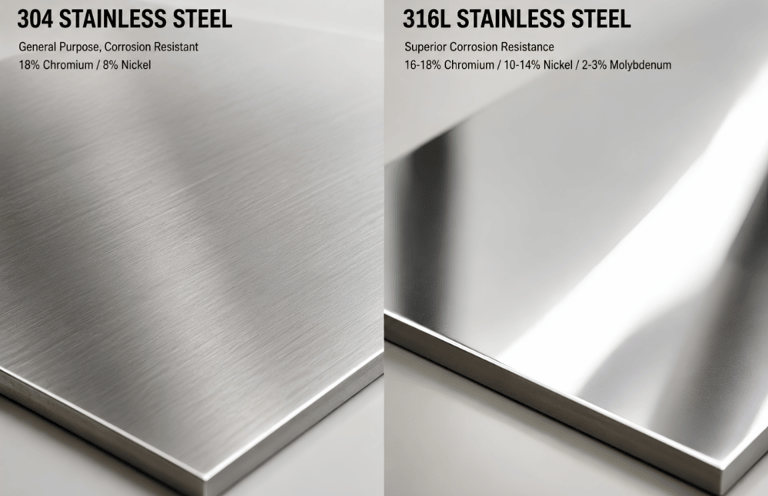
18% Chromium
8% Nickel
This combination provides outstanding resistance against:
Rust
Moisture
Food acids
Cleaning detergents
High temperatures
For most restaurants, hotels, cafeterias, bakeries, and commercial kitchens, 304 stainless steel is the ideal balance between performance and affordability.
What is 316 Stainless Steel?
316 stainless steel contains everything found in 304 stainless steel, plus an important additional element:
2–3% Molybdenum
This small addition dramatically improves resistance against:
Salt
Chlorides
Harsh chemicals
Marine environments
Coastal humidity
Industrial cleaning agents
Because of this enhanced protection, 316 stainless steel is often referred to as Marine Grade Stainless Steel.
Chemical Composition
304 Stainless Steel
Chromium: 18%
Nickel: 8%
Carbon: Low
Molybdenum: None
316 Stainless Steel
Chromium: 16–18%
Nickel: 10–14%
Molybdenum: 2–3%
The addition of molybdenum is the primary reason 316 performs better in corrosive environments.
Why Molybdenum Makes Such a Big Difference
Salt is one of stainless steel's biggest enemies.
When exposed to chlorides over long periods, ordinary stainless steel can develop:
Surface stains
Pitting corrosion
Rust spots
Premature deterioration
The molybdenum in 316 stainless steel significantly improves resistance to chloride attack, making it ideal for:
Seafood processing
Coastal restaurants
Chemical factories
Pharmaceutical facilities
Marine catering operations
Corrosion Resistance Comparison
304 Stainless Steel
Performs exceptionally well in:
Restaurants
Hotels
Cafeterias
Fast food kitchens
Bakeries
Coffee shops
Cloud kitchens
Catering kitchens
It easily handles:
Daily washing
Steam
Humidity
Cooking oils
Food preparation
316 Stainless Steel
Recommended for environments exposed to:
Sea air
Saltwater
Heavy chlorine
Chemical sanitizers
Acidic food processing
It offers significantly better protection against pitting corrosion.
Which Stainless Steel Lasts Longer?
In a normal indoor commercial kitchen:
304 stainless steel can easily last 15–25 years or more with proper maintenance.
In aggressive environments:
316 stainless steel generally lasts longer because of its improved corrosion resistance.
Which Stainless Steel is Better for Food Safety?
Both grades are:
Non-toxic
Non-reactive
Hygienic
Easy to sanitize
Approved for food contact
Neither material contaminates food when properly maintained.
Heat Resistance
Commercial kitchens generate constant heat from:
Gas ranges
Charbroilers
BBQ grills
Fryers
Ovens
Salamanders
Both 304 and 316 stainless steel offer excellent heat resistance suitable for professional kitchen operations.
Cleaning and Maintenance
One reason stainless steel dominates the hospitality industry is its ease of cleaning.
Both grades can be cleaned using:
Mild detergent
Warm water
Soft microfiber cloth
Food-safe stainless steel cleaner
Avoid:
Steel wool
Chlorine bleach
Abrasive cleaners
Strong acids
Regular cleaning preserves the protective chromium oxide layer that gives stainless steel its corrosion resistance.
Cost Comparison
316 stainless steel is typically 20–40% more expensive than 304 stainless steel due to:
Higher nickel content
Molybdenum alloy
Increased manufacturing costs
For many businesses, the additional cost is only justified if the equipment will operate in highly corrosive environments.
Which One is Best for Commercial Kitchen Equipment?
Choose 304 Stainless Steel if you need:
Work tables
Preparation tables
Kitchen cabinets
Exhaust hoods
Refrigerated counters
Commercial sinks
BBQ stations
Shelving
Trolleys
Bakery equipment
It delivers excellent performance for the vast majority of commercial kitchens.
Choose 316 Stainless Steel if your business involves:
Seafood processing
Fish markets
Coastal restaurants
Marine catering
Pharmaceutical production
Chemical manufacturing
Laboratories
High-salinity food production
The extra investment helps prevent corrosion in demanding conditions.
Is 316 Always Better?
Not necessarily.
Many buyers believe that choosing the most expensive option automatically means making the best decision.
However, if your kitchen operates indoors with standard cleaning procedures and no exposure to saltwater or harsh chemicals, 304 stainless steel is usually the most cost-effective and practical choice.
Spending more on 316 without a specific need may not provide additional value.
Frequently Asked Questions
Can 304 stainless steel rust?
Under normal commercial kitchen conditions, 304 stainless steel is highly resistant to rust. However, prolonged exposure to salt, chlorine, or neglected maintenance can lead to surface corrosion over time.
Is 316 stainless steel food safe?
Yes. Like 304, 316 stainless steel is fully food-safe and widely used in the food, pharmaceutical, and medical industries.
Which grade is easier to maintain?
Both grades are easy to maintain. However, 316 typically requires less attention in corrosive environments because it is more resistant to staining and pitting.
Which grade is used in most restaurants?
304 stainless steel is the industry standard for most restaurants, hotels, cafés, cloud kitchens, and catering facilities due to its excellent balance of durability, hygiene, and cost.
Does 316 stainless steel improve cooking performance?
No. The choice between 304 and 316 affects durability and corrosion resistance, not cooking performance.
Final Recommendation
Choosing between 304 and 316 stainless steel depends on your operating environment, not just your budget.
If you run a restaurant, hotel, café, bakery, cloud kitchen, or catering business, 304 stainless steel offers exceptional durability, hygiene, and value. It is the preferred choice for most commercial kitchen equipment and delivers reliable performance for many years.
If your equipment will be exposed to saltwater, coastal air, aggressive cleaning chemicals, or highly corrosive conditions, 316 stainless steel is the better long-term investment. Its added molybdenum provides superior protection against pitting and corrosion, helping your equipment maintain its performance and appearance in challenging environments.
By selecting the right stainless steel grade for your specific application, you can reduce maintenance costs, extend equipment life, and ensure your commercial kitchen remains efficient, hygienic, and compliant with food safety standards.
Why Choose Zahra Kitchen Equipments Manufacturing (L.L.C)?
At Zahra Kitchen Equipments Manufacturing (L.L.C), we manufacture premium commercial kitchen equipment using food-grade 304 and 316 stainless steel, tailored to the needs of restaurants, hotels, catering companies, cloud kitchens, bakeries, hospitals, and industrial food processing facilities.
Our product range includes:
Commercial Exhaust Hoods
BBQ Stations
Refrigerated Counters
Work Tables
Stainless Steel Cabinets
Commercial Sinks
Food Preparation Equipment
Custom Fabrication Solutions
Cold Rooms
Kitchen Ventilation Systems
Whether you require a cost-effective 304 stainless steel solution or the enhanced corrosion resistance of 316 stainless steel, our experienced team can help you choose the ideal material for your project.
Contact us today for a free consultation and customized quotation, and let us help you build a commercial kitchen that delivers exceptional performance, hygiene, and durability for years to come.
Contact Zahra Kitchen Equipments Manufacturing (L.L.C.)
📞 Sales: +971 568 406 235 | +971 567 247 777 | +971 568 406 265
📧 Email: info@zahrakitchenequipments.com
🌐 Website: www.zahrakitchenequipments.com
304 Stainless Steel: The Gold Standard for Kitchens
Discover why 304 stainless steel is the gold standard for commercial kitchens. Learn about the advantages of food-grade stainless steel, fabrication benefits, and the differences between 304 vs 430 stainless steel.

Contact
Ready to build your kitchen? Let's talk.
PHONE AND EMAIL
conect with us
info@zahrakitchenequipments.com
+97156 724 7777
© 2025. All rights reserved.
+97156 840 6235
sales@zahrakitchenequipments.com