304 Stainless Steel: The Gold Standard for Kitchens
Discover why 304 stainless steel is the gold standard for commercial kitchens. Learn about the advantages of food-grade stainless steel, fabrication benefits, and the differences between 304 vs 430 stainless steel.
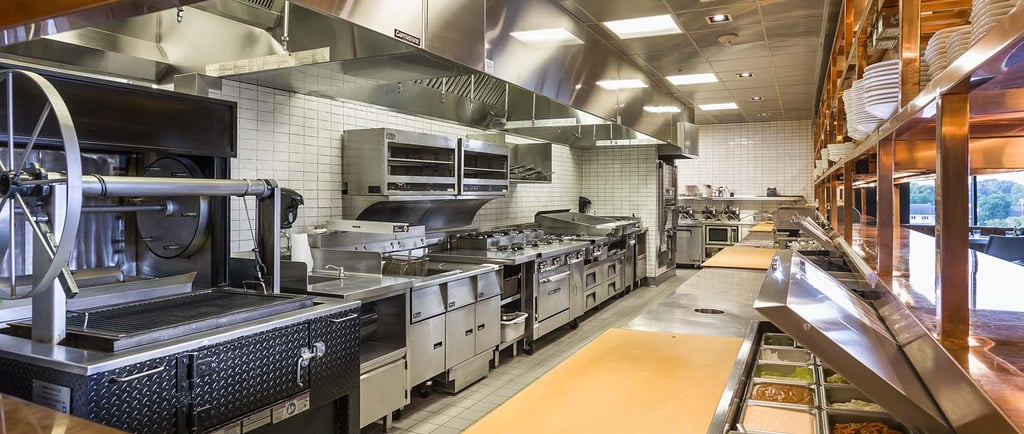

Why Is 304 Stainless Steel the Premier Standard for Commercial Kitchens?
In the culinary world, a professional kitchen is more than a workspace—it is a high-yield manufacturing environment where precision, sanitation, and durability collide. When designing these spaces, every material choice has a direct impact on operational efficiency and regulatory compliance.
Among the options available in stainless steel kitchen fabrication, one alloy stands decisively above the rest: 304 stainless steel.
Below, we provide an architectural and culinary breakdown of why a 304 stainless steel commercial kitchen remains the gold standard and the ultimate long-term investment for serious foodservice operations.
The Metallurgy of Excellence: What Is 304 Stainless Steel?
To understand the superiority of 304 stainless steel, one must look at its atomic composition. Classified as an austenitic alloy, 304 is defined by its precise blend of 18% chromium and 8% nickel—frequently referred to in engineering circles as 18/8 steel.
This specific formulation is highly intentional:
Chromium reacts naturally with atmospheric oxygen to form an invisible, microscopic, and self-healing passive layer across the surface. This layer prevents oxidation (rust) from ever reaching the structural iron base.
Nickel alters the crystal structure of the alloy, vastly improving its ductility, impact resistance, and structural integrity under extreme temperatures.
Culinary Safety: Is 304 Stainless Steel Food-Safe?
Uncompromising hygiene is the foundation of any successful restaurant. 304 stainless steel is the definitive benchmark for food grade stainless steel, satisfying the stringent standards of global health authorities like the NSF (National Sanitation Foundation).
[Pure 304 Alloy Layer] ──> [Passive Chromium Oxide Barrier] ──> [Zero Chemical Leaching]
Its biological safety stems from two distinct properties:
Microbial Resistance: The material is non-porous. Unlike plastics, woods, or lower-grade composites, it leaves no microscopic fissures or valleys where bacteria, mold, or foodborne pathogens can hide and multiply.
Chemical Inertness: 304 stainless steel is completely non-reactive. Chefs can prepare highly acidic or alkaline ingredients—such as citrus reduction sauces, tomato purees, or heavy vinegars—directly on the surface. The metal will not leach metallic ions into the food, ensuring flavor profiles remain untainted and surfaces remain free of pitting.
A Masterclass in Material Selection: 304 vs. 430 Grade
Equipment procurement often presents a financial crossroad: choosing between premium 304 grade and the more economical 430 grade. While they may appear identical on a showroom floor, their performance under pressure reveals a stark contrast.
Engineering Attribute304 Food Grade Stainless Steel430 Commercial Stainless Steel Alloy Matrix18% Chromium + 8% Nickel16–18% Chromium + 0% Nickel Corrosion Performance Elite (Immune to water, steam, organic acids)Moderate (Prone to rust in high-moisture zones)Magnetic Signature Non-magnetic (Austenitic)Strongly Magnetic (Ferritic)Structural Integrity High tensile strength; resists warping under heat Brittle at low temperatures; prone to denting Optimal Application High-impact prep stations, commercial sinks, custom fabrication Appliance exterior shells, backsplashes, accent trim
The Magnet Test: A simple, elegant way to audit your kitchen fabrication is with a magnet. If it tightly adheres to the metal, you are looking at a 430 ferritic steel. If it slides off or has no pull, you are dealing with premium, nickel-bearing 304 grade.
Why Elite Culinary Establishments Mandate 304 SS
The preference for 304 stainless steel among restaurateurs, commercial architects, and health inspectors is driven by three pillars of operational performance:
1. Effortless, High-Velocity Sanitation
Time is a finite resource in a professional kitchen. 304 surfaces can be stripped down, scrubbed, and sanitized with aggressive chemical agents, steam pressure, or boiling water multiple times a day without pitting, clouding, or degrading the finish.
2. Extreme Thermal Resilience
A line cook shifting a screaming-hot cast iron skillet directly from an open flame onto a prep table introduces massive thermal shock. 304 stainless steel absorbs and dissipates this rapid thermal energy seamlessly, preventing the surface bowing, warping, or buckling common in lesser metals.
3. High Tensile Strength
From the rhythmic thud of a heavy cleaver to the weight of 100-quart stockpots, stainless steel kitchen fabrication using 304 grade ensures the structural framework handles mechanical stress without structural fatigue or deep denting.
Engineering Lifespan: How Long Does 304 Stainless Steel Last?
The true value of 304 stainless steel lies in its amortization over time. In a well-maintained commercial facility, 304 stainless steel has an operational lifespan of 25 to 30+ years—frequently outlasting the establishment itself.
Because its corrosion resistance is an intrinsic property woven throughout the entire chemical matrix of the metal rather than an applied topical coating, it cannot wear away. Even if the surface suffers deep scratches from decades of heavy knives, the newly exposed alloy immediately regenerates its protective chromium oxide barrier, continuing to shield your kitchen from rust and contamination.
The Strategic Conclusion
In the commercial kitchen ecosystem, cutting corners on foundational infrastructure is a false economy. Lower-grade alloys invariably lead to premature rusting, structural warping, health inspection failures, and costly operational shutdowns for equipment replacement.
By centering your workspace design around a 304 stainless steel commercial kitchen, you secure an environment engineered for flawless sanitation, relentless durability, and timeless culinary professionalism.
Contact Zahra Kitchen Equipments Manufacturing (L.L.C.)
📞 Sales: +971 568 406 235 | +971 567 247 777 | +971 568 406 265
📧 Email: info@zahrakitchenequipments.com
🌐 Website: www.zahrakitchenequipments.com
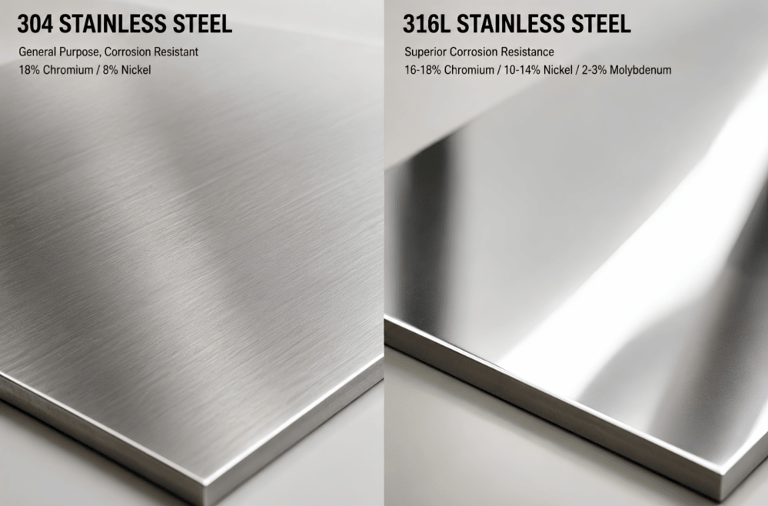
304 vs 316 Stainless Steel Which is Better for Commercial Kitchens? Complete Buying Guide (2026)
Learn the key differences between 304 and 316 stainless steel for commercial kitchens. Compare corrosion resistance, durability, food safety, cost, and discover which stainless steel grade is best for your restaurant, hotel, or food business.

Contact
Ready to build your kitchen? Let's talk.
PHONE AND EMAIL
conect with us
info@zahrakitchenequipments.com
+97156 724 7777
© 2025. All rights reserved.
+97156 840 6235
sales@zahrakitchenequipments.com